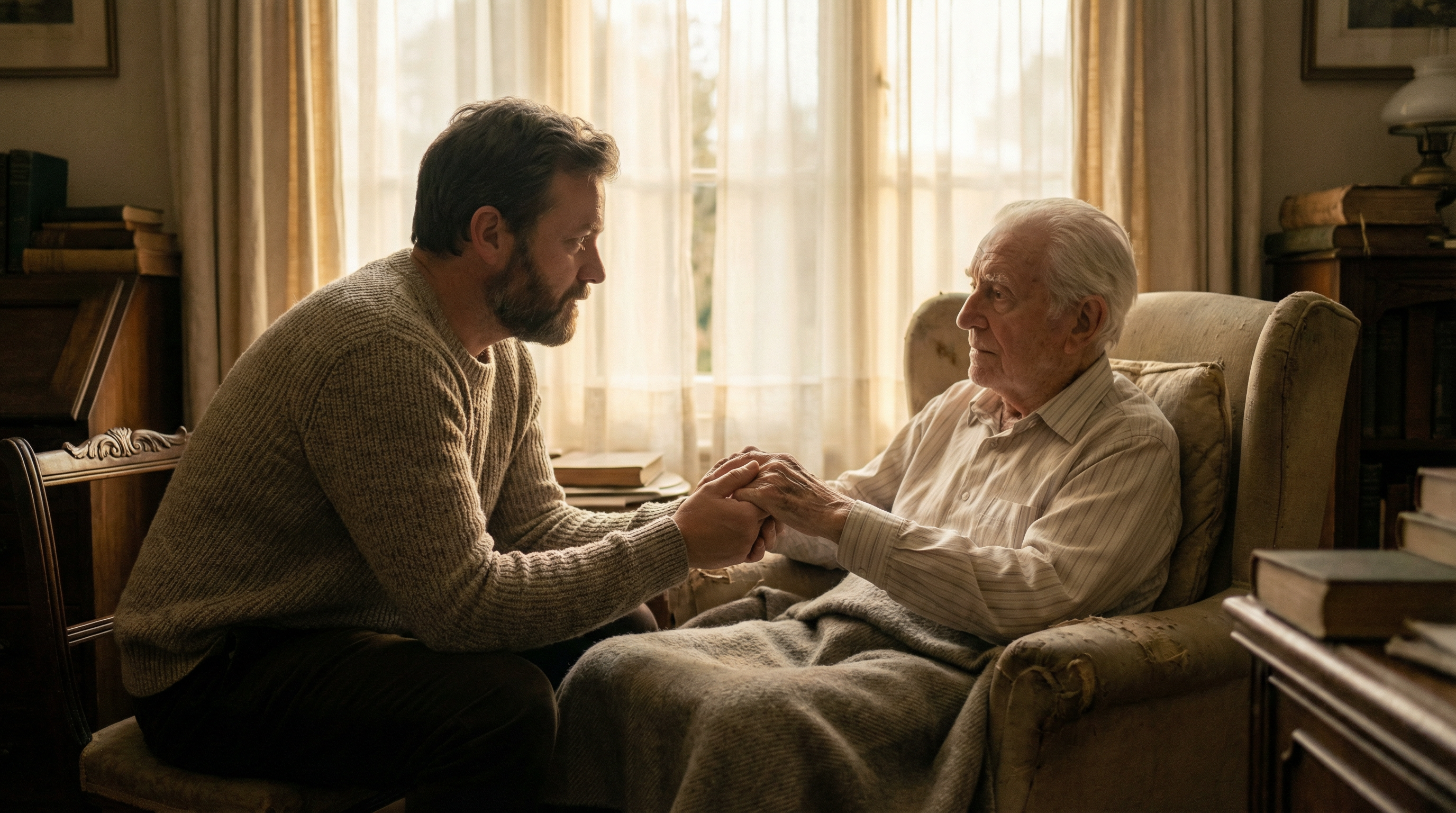
The Caregiver's Guilt: Why Choosing a Care Home Is an Act of Love, Not Abandonment
If you are reading this, there is a good chance you are carrying something heavy right now. Maybe you've been the one managing the medications, the doctor's appointments, the middle-of-the-night calls. And now you're considering a care home, and somewhere in the back of your mind, a voice keeps saying: What kind of person does this?
That voice is called caregiver's guilt. And it is one of the most common, most painful, and most misunderstood experiences in the world of family caregiving. We want to say something clearly, before you read another word: You are not abandoning anyone. You are loving them.
Where Caregiver's Guilt Comes From
Guilt comes from somewhere — usually from a deep well of love, a sense of responsibility, and a set of unspoken expectations about what a "good" family member does. Many of us grew up in families where the expectation was clear: you take care of your own. But the expectation that one person can provide round-the-clock, medically appropriate care for an aging loved one is not realistic. It was never realistic. Holding yourself to that standard is not love — it is an impossible standard that no one can meet.
The Truth About What Care Homes Provide
A good care home does not replace your love. It extends it. Think about what a quality care home actually provides: consistent, trained support around the clock; social connection and community; professional medical oversight; and dignity and routine. Many families are surprised to discover that their loved one becomes more social and engaged after moving into a care community — because they are no longer isolated, and because they have staff who know their name, their preferences, and their history.
What the Research Tells Us
Studies consistently show that family caregivers who transition a loved one to a care home often experience a significant reduction in stress, depression, and anxiety — not an increase. The guilt they feared would consume them often gives way to relief, and then to a different, more sustainable kind of love. They visit. They bring favorite foods. They hold hands and tell stories. They are present in a way they couldn't be when they were also managing every aspect of care.
The Hardest Part: What Your Loved One Might Say
Sometimes the guilt is compounded by something your loved one has said: "Don't put me in a home." When your loved one said those words, they were expressing a fear — the fear of being forgotten, of losing control, of being somewhere cold and institutional. They were not describing the reality of a warm, well-run care home where they are known, cared for, and safe. Honoring the spirit of what they said means ensuring they are loved, respected, and supported. It does not mean keeping them in a situation that is no longer safe.
Frequently Asked Questions
Will my loved one feel abandoned if I move them to a care home?
The transition can be difficult, and some adjustment period is normal. But most residents adapt more quickly than families expect — especially when they are placed in a community that is a genuine fit for their personality and needs. Your continued presence, visits, and involvement are what communicate love. The address is secondary.
How do I handle the guilt after the move?
Give yourself permission to feel it — and then remind yourself why you made this decision. Keep a list of the reasons: the falls, the medication errors, the isolation, the exhaustion. Visit regularly. Stay involved in their care. And consider speaking with a therapist or joining a caregiver support group. You are not alone in this experience.
What if other family members disagree with the decision?
Family disagreements about care decisions are extremely common and deeply painful. It helps to involve everyone in the conversation early, to share information openly, and — when possible — to make decisions together. A placement specialist can sometimes serve as a neutral, knowledgeable voice in these conversations.
Is there support available for families going through this transition?
Yes. At The Golden Connection, we offer family consultations specifically designed to support families through the emotional and logistical complexity of this transition. We also host a free Family Support Group for families navigating aging and care decisions. You are welcome to join us.
You Are Not Alone in This
Every week, we sit with families who are carrying exactly what you are carrying right now. The guilt. The grief. The love. The exhaustion. The desperate hope that they are doing the right thing. We are here to tell you: you are. And we are here to help you find a path forward that honors your loved one, supports your family, and gives everyone — including you — the chance to breathe again. Our placement services are always free to families. Our consultations are always compassionate.
Not sure where to start?
The Golden Connection offers free consultations to help families understand their options. Our placement services are always completely free to families — we're here to help, not to sell.
Schedule a Free Consultation